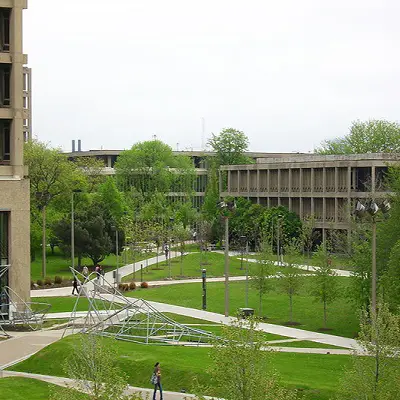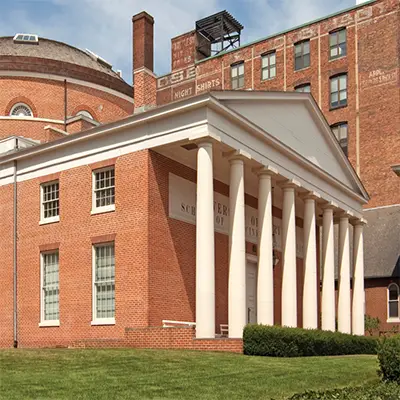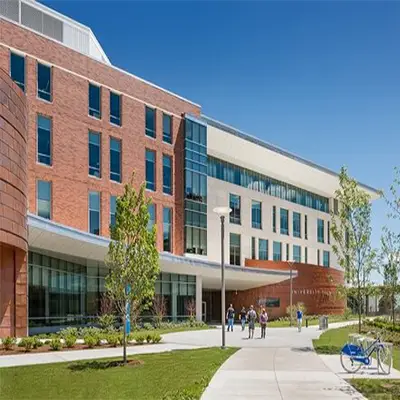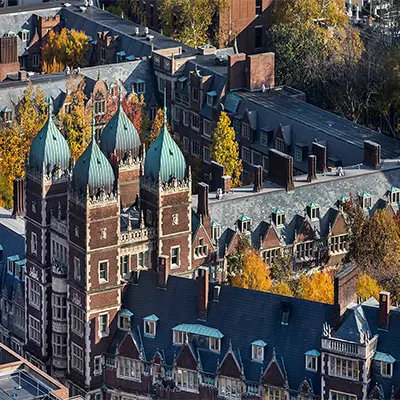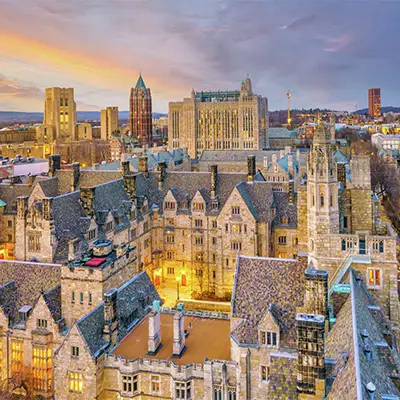


Study in USA is one of the most preferred destinations for international students who are looking for high quality education, international exposure, and diverse education opportunities. With more than 1 million international students enrolled every year the USA stands as a global leader in higher education. Its universities are ranked among the top in global rankings offering a wide range of programs that help students grow both academically and personally. The USA has a strong and flexible education system. It is home to more than 4,000 accredited colleges and universities including some of the world’s most prestigious institutions. Whether you’re interested in science, technology, engineering, mathematics (STEM), arts, business, or social sciences, American universities offer a wide range of undergraduate, postgraduate, and doctoral programs. One of the best features of the US universities is their flexibility. For example a student majoring in Computer Science can take elective courses in Psychology, Economics, or Music creating a holistic and well-rounded learning experience. The advantages of studying in USA include access to world-class universities, diverse programs, and cutting-edge research facilities. The student visa process is well-established, and with the right preparation, students can smoothly transition to life in the USA.
The USA is a hub of innovation and research. American universities receive significant funding from government agencies, private companies, and research foundations, which allows students to participate in groundbreaking research projects. This makes the USA particularly attractive for students pursuing master’s and PhD programs in STEM fields. Studying in USA offers world-class education, diverse courses, and excellent career opportunities in a multicultural environment. A degree from a US university is highly valued worldwide. Graduates often find better job prospects and higher salaries both in the USA and internationally. Optional Practical Training (OPT) and Curricular Practical Training (CPT) programs allow international students to gain practical work experience during or after their studies in fields like IT, finance, healthcare, and engineering. The country is also known for its diversity welcoming students from different backgrounds, countries, and cultures. US universities are highly supportive of international students. They offer various resources such as academic advising, career counseling, mental health support and English language assistance. Moreover, students have access to scholarships, financial aid, and assistantships to help reduce the overall cost of education. Among the major benefits of studying in USA are global career opportunities, cultural exposure, and a flexible education system.
Category
Details
Top Colleges
Harvard University, MIT, Stanford University, Caltech, University of Chicago
Popular Courses
Computer Science, Engineering, Business, Data Science, Medicine, Law
Average Tuition Fees
$20,000 – $50,000 per year (₹16 – ₹42 Lakhs approx)
Living Costs
$10,000 – $18,000 per year (₹8 – ₹15 Lakhs approx)
Intakes
Fall (August), Spring (January), Summer (May – limited courses)
Language Requirements
IELTS: 6.0–7.5 / TOEFL: 80–100 / Duolingo: 105+
Scholarships
Fulbright, Stanford Knight-Hennessy, University-specific aid, Merit-based
Part-time Work
Up to 20 hours/week on campus during semester and full-time during vacations
Eligibility Criteria
12th pass (UG), Bachelor's (PG), Language test scores, SOP, LORs, Passport
Visa Type
F-1 Student Visa
Application Time
10–12 months before intake (Start early)
Job Opportunities
IT, Healthcare, Finance, Engineering, AI, Research
If you're wondering why do you want to study in USA, the answer lies in its world-class education, top-ranked universities, and global career opportunities. Studying in the USA also offers cultural diversity, advanced research facilities, and a strong support system for international students. There are many reasons which are given below for the better understanding:
World-Class Education: The USA has many top-ranking universities known for high-quality education and global recognition.
Wide Range of Courses: Students can choose from thousands of programs in different fields like science, business, engineering, arts, and more.
Flexible Learning System: You can choose your subjects, change your major, or study multiple subjects at once.
Research and Innovation: US universities focus on practical learning and research. Students can work on real-life projects with expert guidance.
English-Taught Programs: Most courses are in English, which helps students improve their language and communication skills.
Cultural Diversity: Students from all over the world study in the USA. This gives you a chance to learn about new cultures and make international friends.
Part-Time Work Opportunities: Students can work up to 20 hours per week during studies to support their living expenses.
Strong Job Market: A US degree is respected globally and increases your chances of getting good jobs.
To study in the USA, international students must meet certain academic and language requirements. These criteria may vary depending on the level of study such as undergraduate, postgraduate, or doctoral. However, the basic eligibility remains similar for most institutions.
Study Level
Academic Requirement
Language Requirement
Standardized Tests
Undergraduate (UG)
10+2 from a recognized board (minimum 60% preferred)
IELTS 6.0–6.5 / TOEFL 80+ / Duolingo 105+
SAT / ACT (optional at some colleges)
Postgraduate (PG)
Bachelor’s degree (3 or 4 years) with minimum 60–70% marks
IELTS 6.5–7.5 / TOEFL 90+ / Duolingo 110+
GRE / GMAT (depends on program)
PhD / Doctoral
Master’s degree with research background
IELTS 7.0+ / TOEFL 100+
GRE / GMAT (as per university)
Getting admission to a US university involves multiple steps from researching programs to getting a student visa. Apart from this, the requirements to study in USA include a valid passport, academic transcripts, English language proficiency test scores, and a student visa.The process takes time, so it's best to start early which takes 10 to 12 months before your preferred intake. Below explains the process in simplistic way:
Research and Choose Universities: Begin by exploring different universities and courses that match your academic background, interests, career goals, and budget. Check each university’s official website to understand their admission requirements, application deadlines, tuition fees, and available intakes.
Take Required Tests: To meet language proficiency requirements, appear for standardized English tests like IELTS, TOEFL, or Duolingo.
Prepare Documents: Gather all necessary documents for your application which includes include your academic transcripts, Statement of Purpose (SOP), Letters of Recommendation (LOR), Resume or CV, a valid passport and standardized test scorecards (IELTS, GRE, etc.).
Apply to Universities: Submit applications to the university websites. Complete the forms carefully and pay the application fee which usually ranges from $50 to $100 per university.
Wait for Offer Letters: After submitting your applications, universities will evaluate your profile and may send you an offer letter if you are selected.
Accept Offer and Pay Deposit: Once you receive multiple offers, choose your preferred university. Accept the offer by submitting a formal acceptance form and pay the enrollment deposit to confirm your admission and reserve your seat.
Apply for Student Visa (F-1): After receiving your Form I-20 from the university, start the F-1 visa application process.
Prepare for Departure: Once your visa is approved, you can start preparing for your journey. Book your flight, arrange accommodation, and attend any pre-departure orientation sessions offered by your university or education consultants.
To study in the United States international students must obtain an F-1 Student Visa. The visa process starts after receiving an admission offer from a US institution and the Form I-20 (Certificate of Eligibility for Nonimmigrant Student Status). Applying for a student visa requires preparation, documentation, and a visa interview at the US Embassy or Consulate. It is important to begin the process well in advance, ideally 3 to 4 months before your program start date.
Step 1: Get the I-20 form from your university after accepting the offer and paying the deposit. It is needed to start your visa process.
Step 2: Pay SEVIS Fee, pay the $350 SEVIS I-901 and keep the receipt.
Step 3: Fill DS-160 Form in which the candidate has to upload your photo, and print the confirmation page.
Step 4: Pay the $185 visa application fee online and save the receipt.
Step 5: Attend VAC Appointment. For that, visit the Visa Application Center for your fingerprints and photo. Carry your passport and DS-160 confirmation.
Step 6: Go to the US Embassy for your visa interview with all required documents. If approved, you’ll get your visa-stamped passport soon.
The United States offers a wide variety of courses across thousands of colleges and universities. Whether you're planning to study at the undergraduate, postgraduate, or doctoral level, the USA provides flexible learning options, world-class faculty and practical training opportunities.
Course Name
Specializations
Computer Science
Software Engineering, AI, Cybersecurity
Business Administration
Marketing, Finance, Management, International Business
Engineering
Mechanical, Civil, Electrical, Aerospace
Biological Sciences
Biotechnology, Genetics, Microbiology
Psychology
Clinical, Cognitive, Counseling
Economics
Development, Financial, International Economics
Mathematics & Statistics
Applied Math, Data Analytics
Media and Communication
Journalism, Film Studies, Digital Media
Political Science / International Relations
Global Politics, Public Policy
Architecture
Urban Design, Sustainable Architecture
Master of Science (MS)
Computer Science, Data Science, Engineering
Master of Business Administration (MBA)
Finance, HR, Supply Chain, Marketing
Public Health (MPH)
Epidemiology, Health Policy, Global Health
Law (LLM)
Corporate Law, International Law, Criminal Law
Education (M.Ed.)
Curriculum Design, Educational Leadership
Master of Fine Arts (MFA)
Visual Arts, Creative Writing, Theatre
Environmental Science
Climate Change, Sustainability, Ecology
Artificial Intelligence / Machine Learning
Robotics, Deep Learning
Program Level
Tuition Fee (USD/year)
Tuition Fee (INR/year)
$20,000 – $40,000
₹16 – ₹33 Lakhs
$25,000 – $50,000
₹20 – ₹41 Lakhs
$28,000 – $55,000
₹23 – ₹45 Lakhs
Community Colleges
$8,000 – $15,000
₹6.5 – ₹12 Lakhs
MBA Programs
$35,000 – $70,000
₹29 – ₹58 Lakhs
Medical Programs
$40,000 – $75,000
₹33 – ₹62 Lakhs
The cost of living in the USA depends on the city, lifestyle, and university location. Understanding the study in USA cost is important for planning, as expenses vary widely based on course, university, and city of residence. Major cities like New York, Boston, or San Francisco are more expensive, while smaller towns and midwestern states are more affordable. On average, students spend $10,000 to $18,000 per year (approx. ₹8–15 lakhs).
Expense Type
Monthly Cost (USD)
Monthly Cost (INR) (approx.)
Accommodation (Rent)
$400 – $1,200
₹33,000 – ₹1,00,000
Food & Groceries
$200 – $400
₹16,000 – ₹33,000
Transport
$50 – $150
₹4,000 – ₹12,000
Utilities & Internet
$100 – $200
₹8,000 – ₹16,000
Health Insurance
$80 – $150
₹6,500 – ₹12,000
Studying in the USA can be expensive but many scholarships and financial aid options are available for Indian students. Many international students apply for a scholarship to study in USA to reduce the high cost of tuition and living expenses. These scholarships help reduce tuition fees, living costs and other expenses. Some are offered by the US government, universities or private organizations based on academic excellence, financial need, or specific talents.
Scholarship Name
Offered By
Fulbright-Nehru Master's Fellowship
US-India Educational Foundation
Stanford Knight-Hennessy Scholars
Stanford University
Inlaks Shivdasani Foundation
Inlaks Foundation (India)
Tata Scholarship – Cornell University
Tata Trusts & Cornell University
AAUW International Fellowships
American Association of University Women
Rotary Foundation Global Grants
Rotary International
Hubert H. Humphrey Fellowship
US Government
Illinois State University Scholarships
Illinois State University
Clark University Global Scholars Program
Clark University
The USA is home to many globally ranked universities which offer high quality of education, world class facilities and great career opportunities. Here are some of the most popular and top-ranked institutions:
University Name
Location
Massachusetts Institute of Technology (MIT)
Cambridge, MA
Stanford, CA
Harvard University
California Institute of Technology (Caltech)
Pasadena, CA
University of Chicago
Chicago, IL
Princeton University
Princeton, NJ
Yale University
New Haven, CT
Columbia University
New York, NY
University of California, Berkeley (UC Berkeley)
Berkeley, CA
University of Pennsylvania (UPenn)
Philadelphia, PA
University of Michigan, Ann Arbor
Ann Arbor, MI
New York University (NYU)
Duke University
Durham, NC
Cornell University
Ithaca, NY
University of California, Los Angeles (UCLA)
Los Angeles, CA
Studying in the USA is a popular choice for Indian students due to its world class universities, diverse courses, and global recognition. Students can pursue undergraduate, postgraduate, and doctoral programs in fields like engineering, business, data science, and more. The USA offers best education, research opportunities and career support through internships and Optional Practical Training (OPT). Study in USA for Indian students offers world-class education, global career opportunities and a rich cultural experience in top-ranked universities. With flexible learning, scholarships and multicultural campuses, students gain international exposure and valuable skills. The cost of studying can be high but financial aid and part-time work help manage expenses. A US degree also boosts job prospects globally, including in India.
Studying in the USA offers excellent career scope for Indian students. With top-ranked universities and industry-relevant programs, students gain practical skills, global exposure, and strong academic knowledge. Fields like IT, engineering, business, healthcare and data science offer high job demand. International students can work through OPT and STEM graduates get up to 3 years of post-study work. Many global companies prefer US-educated candidates for top roles. A US degree is highly respected and improves job prospects not only in the USA but also in India and other countries, helping students build successful international careers.
Study in USA
Study in Australia
Study in UK
Study in France
Study in New Zealand
Study in Italy
Study in Netherlands
Study in Germany
Study in Canada
Study in Ireland
Study in Singapore
Study in Sweden
Free Counseling Awaits!
Secure Data - No Spam!
Affinity Education is a trusted source for authentic educational guidance. From admission-related help to e-learning resources, it ensures that students receive all the help they need to crack the major exams.
Russia, Georgia, Uzbekistan, Kazakhstan, Kyrgyzstan, Philippines, Bangladesh, Nepal, China
USA, UK, Canada, Australia, New Zealand, Ireland, Germany, France
© Affinity Education 2025. All rights reserved.